

In the previous article, a deliberately unfashionable claim was proposed: that the U.S. healthcare crisis is not primarily a failure of compassion or funding, but of structure.
America spends more on healthcare than any other nation (nearly 18% of GDP), yet delivers outcomes that trail most of its OECD peers. This is not because Americans receive radically more care. It is because they pay radically more for it.
Hospitals charge multiples for identical services, drug prices float untethered from international norms, and administrative complexity absorbs resources that never touch a patient.
Other modern nations take a different view. They treat healthcare less as a competitive marketplace and more as a public utility: coordinated, regulated, and designed to deliver “health per dollar,” not revenue per transaction. The contrast is stark. Where peer systems emphasize prevention, price discipline, and national planning, the U.S. relies on fragmented bargaining among insurers, hospital systems, and pharmaceutical firms, each rational within its silo, but collectively inefficient.
Crucially, there is something easily overlooked: the U.S. government already knows how to govern essential systems. It centrally negotiates prices for defense, regulates utilities, manages strategic resources, oversees transportation infrastructure, and even negotiates drug prices effectively for veterans and active-duty military. Healthcare alone was permitted to evolve as an exception, a hybrid of local monopolies, private insurers, and fragmented public payers.
The result is a system that is expensive by design, opaque by habit, and politically difficult to reform.

The Question Reformers Rarely Ask
If the problems are so obvious and the tools for coordination so well established, why does meaningful reform remain elusive?
The standard answer is political inertia. Lobbyists. Entrenched interests. Ideological stalemate. All true, as far as it goes.
But that explanation quietly assumes something else: that real change must originate inside the system itself; from legislators, regulators, or incumbent institutions deciding to behave differently.
History suggests otherwise.
Structural reform rarely begins with goodwill. It begins when the conditions that protect existing power structures erode. When complexity no longer conceals inefficiency. When justification no longer substitutes for explanation. When those bearing the costs finally understand where their money is going - and why.
That is where this discussion turns.
Enter AI: Not as Savior, but as Solvent
Artificial intelligence will not fix American healthcare by making people kinder or politicians braver. Its impact is subtler and far more destabilizing.
AI functions as a solvent on information asymmetry, the quiet force that has long sustained the healthcare status quo.
For decades, pricing opacity, clinical complexity, and administrative fog insulated institutions from scrutiny. Patients could not see alternatives, compare costs, or contest decisions in real time. Authority rested comfortably behind expertise and exhaustion.
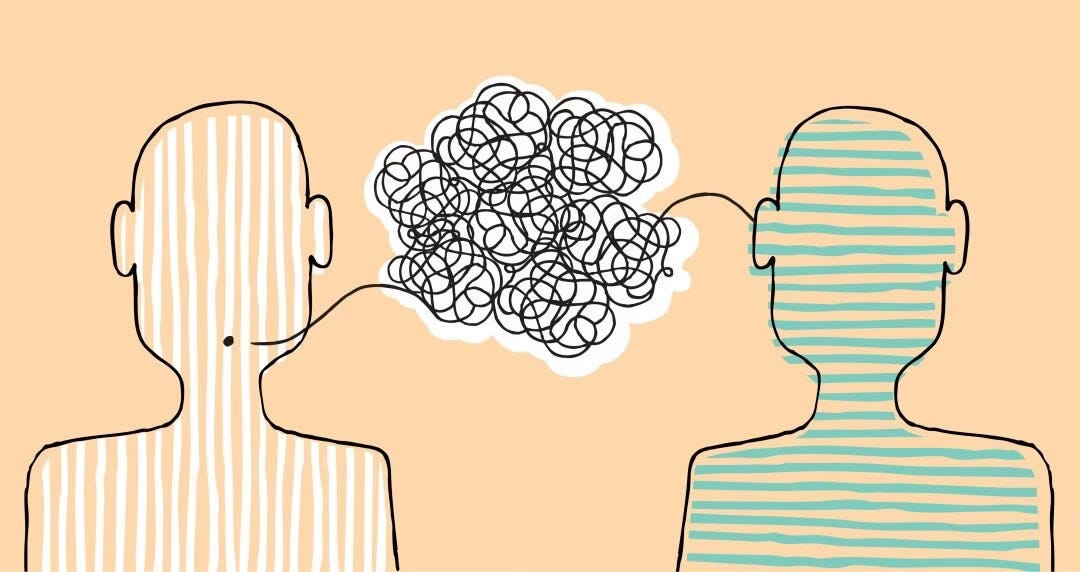
AI potentially changes that equation.
It makes prices legible before care is delivered. It translates clinical guidance into plain language. It exposes variance in outcomes and cost that branding once disguised. It reveals which intermediaries add value and which merely extract it. Most importantly, it does so at scale, without asking permission.
In the following sections, we’ll examine how collapsing information asymmetry alters incentives across the healthcare landscape and why this, more than any election cycle or reform bill, may prove to be the mechanism that finally forces change.
When Information Stops Being Scarce
The dysfunction in U.S. Healthcare has endured for one simple reason: the people paying for it have never been allowed to see it clearly.
Prices arrive after services are rendered. Clinical decisions are framed as inevitabilities. Administrative complexity is treated as a divine act. Between the patient and the actual cost of care sit layers of intermediaries (insurers, PBMs, hospital billing departments, compliance vendors) each justified by “expertise” the public cannot easily interrogate.
This is not accidental. It is how the system protects itself.
Information asymmetry has long served as healthcare’s load-bearing wall. Patients lack pricing context. Employers lack outcome visibility. Regulators lack real-time data. Even boards and shareholders often rely on curated metrics rather than operational truth.
AI dissolves information asymmetry quietly. Not by regulation. Not by moral appeal. But by making once-proprietary knowledge cheap, fast, and unavoidable.
The Collapse Mechanism
AI provides a destabilizing feature that is currently absent. The power of comparison.
When large language models can ingest millions of claims, contracts, formularies, and outcomes (and present them coherently) the mystique of healthcare pricing erodes. A $7,000 MRI is no longer a mystery; it becomes an outlier. A denied claim is no longer final; it becomes contestable. A treatment pathway is no longer “standard of care” because someone says so; it is benchmarked against outcomes elsewhere.
This matters because healthcare power has always rested on three advantages:
Opacity – prices are unknowable until too late
Authority – expertise is difficult to challenge
Fragmentation – no single actor sees the whole picture
AI threatens to weaken all three simultaneously.
Patients gain intelligible explanations before consenting. Employers gain visibility into cost drivers across populations. Physicians gain second opinions at machine speed. Regulators gain pattern recognition that once took years of audits.
None of this requires systemic permission. It arrives through apps, advisors, copilots, and analytic overlays adjacent to the system, not embedded within it.
Which brings us to the uncomfortable part.
Who Becomes Exposed
AI does not equally expose healthcare inequalities. Some sectors become more valuable under radical transparency. Others will find their margins suddenly indefensible.
Primary care improves: triage, prevention, continuity, and patient education scale efficiently.
High-performing specialists benefit: outcomes become visible, not just reputations.
Efficient systems gain leverage: cost discipline finally counts.
But entire layers of the current ecosystem face existential pressure:
Administrative middlemen whose value proposition depends on complexity rather than insight
Price arbitrageurs who rely on differential ignorance across payers
Local monopolies whose pricing only works in the absence of alternatives
Opaque contracting structures that collapse once comparisons become trivial
When justification must be explained in plain language, when pricing must survive comparison, when inefficiency becomes observable, some institutions will discover they were never as essential as they believed.
From Frustration to Pressure
Earlier, we asked whether rising healthcare costs produce something more than financial pain. Whether they generate political pressure, defiance, or revolt.
Historically, they have not. People grumble. They complain. They vote. But opacity dulls outrage, while confusion and complexity exhausts resistance.
AI alters the emotional economy.
When individuals can see clearly who benefits, why prices differ, and where value evaporates, anger becomes directional, pressure becomes focused and narrative coherence replaces generalized resentment.
This matters because political systems respond to organized clarity, not to “suffering” as many believe.
AI supplies that clarity without rallies or revolutions. It creates what might be called ambient accountability: persistent, data-backed visibility that boards, journalists, and voters can no longer ignore.
Why This Is Not Technological Optimism
This argument does not assume benevolent actors or enlightened markets. Bu that AI will accelerate pressure convergence. The point where institutions and politicians delay until pressure converges.
By collapsing information asymmetry, it removes the system’s most reliable shield. It does not mandate a healthcare-as-a-utility model, but it makes defending the current model increasingly expensive, publicly, reputationally, and politically.
In effect, AI shortens the distance to reform.
The Other Side of Obvious
The obvious story is that healthcare reform requires better laws, better leaders, or better intentions. The other side is quieter and more unsettling.
Systems rarely change because they are persuaded. They change because they are seen.
Healthcare has operated for decades behind a veil of complexity that protected inefficiency and punished scrutiny. AI thins that veil, relentlessly, until pretending becomes harder than explaining.
That may not fix everything. But it may finally make the current arrangement impossible to defend; and that, historically, is how reform actually begins.
🚀 Up Next:
Thursday - Retirement Series #4: Building a Lasting Legacy
This publication is for brains, not bets. The Other Side of Obvious shares ideas, stories, and general financial information - not personalized investment, tax, or legal advice. Investing comes with risk (including losing money). Talk to a pro before you act. Please take time to read these important disclosures before you get started.