

A few weeks ago I was in Paris, and happened to have dinner in Le Pavillon Ledoyen, a rare stand-alone building on Avenue Dutuit just behind Le Petite Palais (baby brother to Grand Palais across the street). Exiting the Uber, I noticed a sign of the adjoining road to Avenue Dutuit named Avenue Edward Tuck.
Who in the world was Edward Tuck? So, I made a mental note and later decided to check ChatGPT do some research. (If you are a Dartmouth graduate, then you know already! Tuck’s donation helped found what was generally regarded as the world’s first graduate school of management.)
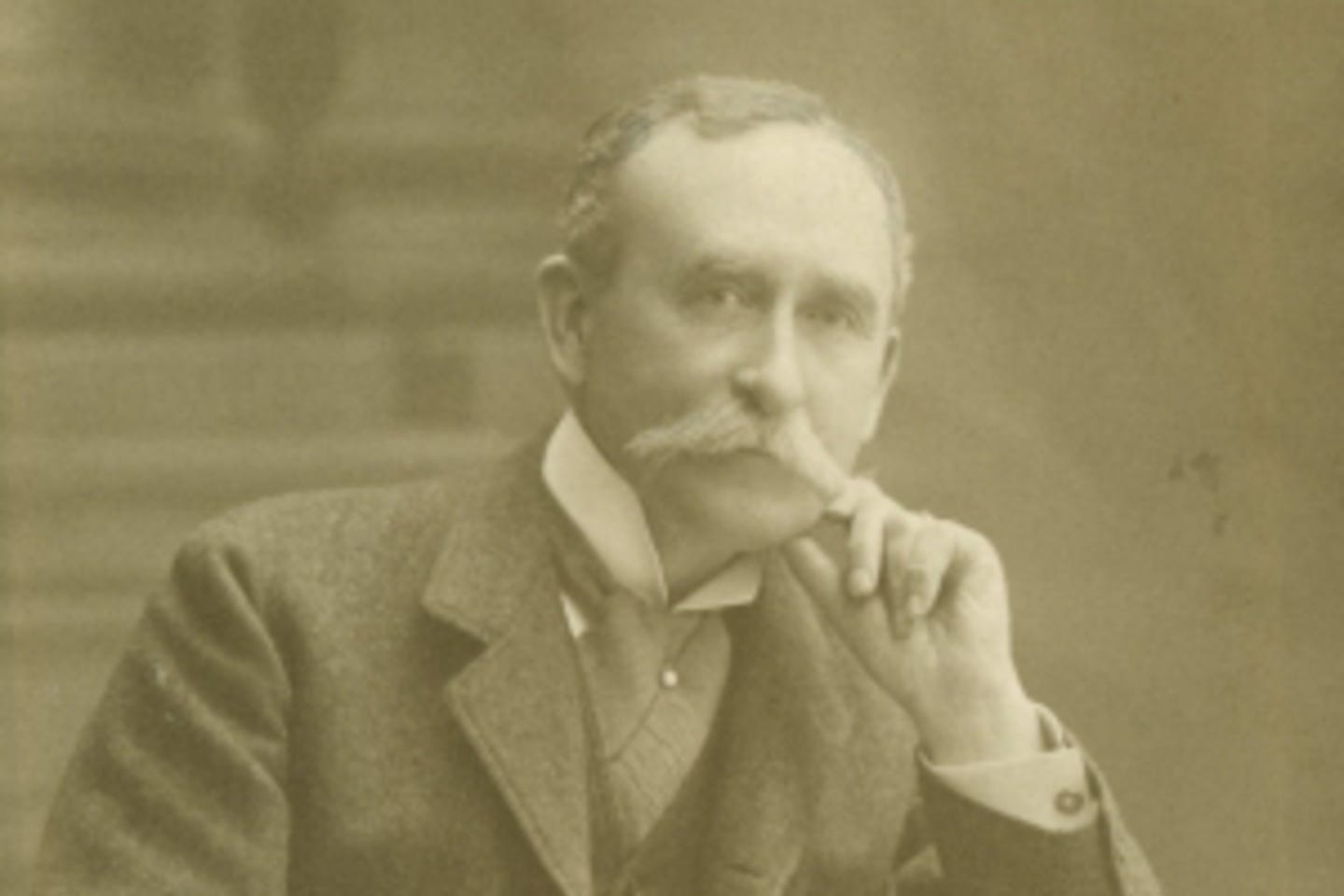
Tuck’s Investment Philosophy
Edward Tuck was appointed the US Vice Consul in Paris (age 22), joined an American banking house (John Monroe & Co), where he became partner at age 29. Having earned a vast fortune, he “retired” when he was about 38 or 39 years of age.
Simply incredible. But that isn’t his greatest accomplishment.
Tuck didn’t retire in the conventional sense of the word. In fact, he was just getting started. With a wealth of knowledge in international affairs, international banking and wealth management, he set his sights on acquiring assets.
Nothing immensely unique about that, except the philosophy behind his decision:
Own productive assets. Producing something of enduring economic value.
Buy change. Especially structural change.
Think in decades. Build through long-term ownership.
He began investing capital from the wealth accumulated in banking, diversifying his interests in banking, utilities, mining, railroads and industrials. However, within those holdings Tuck focused his concentration on railway. This new technology became his over-arching investment conviction, simply because he foresaw railways enduring economic value. He anticipated how productive an asset railways would be—nothing in it suggested it was a “trend.”
He committed himself to disruptive structural change. That sounds simple, but not when everyone around you is thinking otherwise. “Disruptive” is often depicted as “bad.” When the media is screaming how horrible things will happen because of it! It might seem otherwise, but Tuck accumulated wealth during an era of extraordinary volatility. He invested through numerous financial panics, railroad “wars”, commodity cycles, recessions and immense technological disruption. So, he did not have a smooth path at all.1
Yet, his commitment to structural change is the capstone of his investing career. His investment in Great Northern happened before the “railway system” was established. Please don’t miss this point: Tuck was investing when there was still mass uncertainty and little evidence (i.e., financial data) pointing to success. He committed to railways with a clear understanding that a conviction in “structural change” requires investing through (and often before) the structural buildout is complete!
What’s more, Tuck’s approach wasn’t necessarily “buy and hold” and hope for the best. He approached investing with decades in mind! One might argue that “he could afford to be patient.” Hmm. Yeah, but nah! Because it doesn’t matter if you invest $10,000 or $10,000,000. Every human—everyone—hates the thought of being parted from their money. No one likes to lose.
A Purpose for Money
It was Edward Tuck who donated an extensive collection of artwork to Le Petite Palais, after settling in France permanently. So, they named a small avenue after him. However, Edward Tuck was not in the business of name recognition. He repeatedly converted his wealth into philanthropy.
In a way, I believe Tuck was more of a true investor in his philanthropic efforts than he was in the commercial world. His legacy was built in two important ways:
He didn’t give funds indiscriminately. He wasn’t trying to lower his tax base or deploy some financially-engineered scheme. For example, his $300k gift that was the foundation of Dartmouth’s Tuck School of Management was funded with his railway stocks! He saw the benefit of donating productive assets, so that they keep exponentially producing. He wanted his wealth to be productive.
He was rewarded by return on human capital. He donated to hospitals, schools, museums, towards the arts, education, and the like. In other words, he invested in the lives of people and culture.
As successful as Edward Tuck was at generating wealth, his life’s work and legacy is most notable in his efforts to remove money out of the center of his own life.
So, the story of Edward Tuck is about investing in structural change. It’s going on right in front of us, if you hadn’t noticed.
And, his legacy raises a few questions:
What if the purpose of investing is not to become wealthy, but to be free to decide what the wealth is for?
How would that look?
How might that inform my approach to investing?
This publication is for brains, not bets. The Other Side of Obvious shares ideas, stories, and general financial information—not personalized investment, tax, or legal advice. Investing comes with risk (including losing money). Talk to a pro before you act. Please take time to read these important disclosures before you get started.
Be definition anything that is structurally disruptive will naturally coincide with a deluge of negative, if not cynical, depictions or narratives. Or to put it another way, change is uncomfortable—anything uncomfortable rouses the masses (and media) to amplify the negative narrative. The most beneficial technological disruptions rarely start by being “great.” They always start with discomfort and become great over time.
Great story weaved in!